The Moving of the Soul
Between New York and California, between past and future — a reflection on what we hold onto and what we leave behind. A moving story. Literally.
NEWSPERSONAL GROWTH
4/24/20269 min read
🇬🇧 English
We are in motion. Another move. Perhaps the most complex of my life — a coast to coast move, from New York to California. A somewhat unusual move: there's a little of my stuff, the things from the house, but mostly Henry's things. And while I pack, an entire life flows through my hands. It's not the first time, I've been through this before. It's a déjà vu: I lived it last summer, when I rented the apartment to tenants, I had to throw some things away, pack the others neatly into boxes, to carve out a space where I could keep what was left of me. A painstaking operation, long and painful. A moving of the soul.
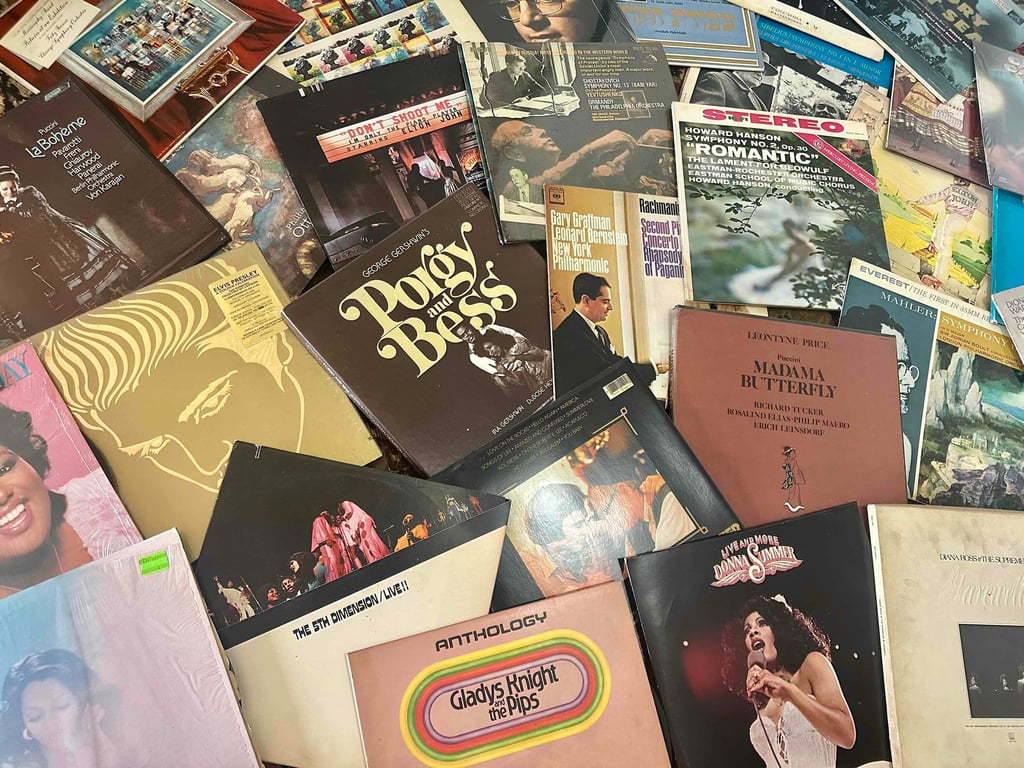
Now I find myself here again, among boxes and dust, and from the dust, stories emerge. These things are not mine, but they belong to me a little. There is a karmic bond and shared interests. As I pack with tape and bubble wrap, I watch an entire life go by. A life made of art: records, vinyl, CDs, videotapes, films, books — books on history, on presidents, on artists and scientists. And then art, paintings, photographs, design objects. The Eames chair and Kimono, a painting on canvas suspended in the void, here in the living room, in front of what has been my studio for 5 years.
Five years in New York, who would have ever thought. Living with a New Yorker and trying to savor every moment. A delicate subject, given that you get used to everything and even living in New York becomes normal. Living in a place with someone whose past is fascinating and full of "mystery", trying not to miss a single crumb along the way — stories of a magical, beautiful, gigantic, unique, difficult, exhausting city, in constant change, one that gives so much and takes everything. Among these objects live New York, America, and the entire world. Every title stops me, intrigues me, calls to me. I want to freeze everything and wait, not throw anything away, preserve it all and take it with me. But it's not possible. There's no space. There's no time. It might seem like just a logistical issue, but it's not only the cost of shipping — there is the enormous cost of everything you cannot hold onto in your life. Maybe inside us there isn't room to hold onto everything. Maybe we need to create new space and let go.
Living in a skyscraper with 680 apartments in New York means witnessing a constant flow of people, always moving fast. The city never stops. And here people move every day, they look like ants on the march — they arrive, they leave, they come, they go. There is a constant sense of energy, of movement, nothing ever stands still here. And then what happens? What do you do next? What's after that? There's always something else to do right away. There's never time, especially to appreciate what you have.
And so I wonder: is it better to be still or to be in motion?
An apparently simple question, but one that hides something much deeper, that touches the very meaning of life. Something that defines the priorities of who I am today and will shape the outline of who I will be tomorrow.
Especially now that the world has gone digital, that it has accelerated everything. Music, films, books — everything is streaming. What's the point of keeping physical objects when they are heavy, take up space, collect dust, and you've already experienced them? And yet living alongside someone like Henry, with a past steeped in music, cinema, theater, and culture, means standing face to face with the history of this city — that of the musical, of film, of culture, the news and the events that defined an era. I tried to keep what could still inspire me. What made me daydream as a child and that still today inspires me and projects me into a dimension that no longer exists. But I could only — and perhaps only wanted to — keep five percent of things, no more. 5% of the past.
Some things we donated, others left at thrift markets, others left near the service elevator, where they sit for a few hours before the recycling attendant comes by. There are bins for paper, plastic, glass and metal. Right next to them you can leave things you no longer use; whoever passes by always finds something to take. You can find everything there, often brand new objects, never used or barely touched. And in a city like this — among the most expensive in the world — it often makes more sense to simply throw things away and buy new ones. Moving costs are prohibitive. I even saw someone buy socks, wear them, and throw them away. That's what they call "disposable." If you don't have a washing machine, if you don't know how, if you don't have time, if you don't have a culture of saving. Exactly, I said culture. And there are so many cultures here, everyone has their own, and in a multiethnic metropolis that's not a given. We're not in a small town. In this case it's called consumerism. It's a country built on a capitalist economy. These are things that are obvious to me by now: I was born a consumer, I was that way as a child — a consumerist raised in a family of savers. So I've always lived my shopping sprees with a side of guilt. And yet… this is my city, I feel at home here, I find everything, all the latest things, I'm always up to date, I buy, I purchase, and then when I'm tired of it I throw it away. Wait, no — I never throw anything away, I can't bring myself to part with things, I hate seeing the past tossed into a dumpster. But it happens. Yes, and what a knot in my stomach. I've gone in loop! I have an inner conflict. These are thoughts that intertwine, chase each other, and create a discomfort that doesn't sit well with me.
Just as it doesn't sit well with me to go back to my house in Italy. Going back to the past, rediscovering the comfort zone I struggled so hard to leave behind and let go of. And in the house, more objects. More stuff. Stuff, as Giovanni Verga once wrote. Because with things come thoughts. Nostalgia returns. And alongside the nostalgia for the past come questions about the future — which should always be bright, full of possibilities and new stimuli. But it isn't always. Sometimes the excitement of something new gives way to anxiety, uncertainty, fear.
Blessed are those who have no ambitions. Blessed are those who have no interests. Blessed are those who are not curious. Blessed ignorance.
And so I ask myself: is it better to keep moving or to stop?
Maybe the answer is also political, in the broadest sense of the word. Those who are progressive are already on their way toward change, toward something new. Those who are conservative prefer not to move, to stay anchored to what they know. Those who don't change hold tightly to old memories, to old things — which perhaps no longer have any real value, but carry a deeply emotional one, made of memory and identity. Those who look ahead, on the other hand, know those memories exist — but choose not to let themselves be imprisoned by them.
One thing is certain: at some point, we all move.
And in the moving of the soul, which part of me do I throw away?
🇮🇹 Italiano
Siamo in movimento. Un altro trasloco. Il più complesso della mia vita forse — un trasloco coast to coast, da New York alla California. Un trasloco un po' anomalo: c'è un po' della mia roba, le cose della casa, ma soprattutto le cose di Henry. E mentre preparo i pacchi, tra le mani scorre tutta una vita. Non è la prima volta, ci sono già passato. È un déjà vu: l'ho vissuto l'estate scorsa, quando ho affittato la casa agli inquilini, ho dovuto buttare via alcune cose, mettere le altre organizzate in scatole, per ricavare uno spazio dove custodire quello che restava di me. Un'operazione di cesello, lunga e dolorosa. Un trasloco dell'anima.
Ora mi ritrovo di nuovo qui, tra scatoloni e polvere, dalla polvere emergono storie. Le cose non sono mie, ma un po' mi appartengono. C'è un legame karmico e interessi comuni. Mentre impacchetto con il nastro adesivo e il bubble wrap, la carta da imballaggio con le bolle, vedo scorrere una vita intera. Una vita fatta di arte: dischi, vinili, CD, videocassette, film, libri — libri di storia, di presidenti, di artisti e di scienziati. E poi arte, quadri, fotografie, oggetti di design. La poltrona Eames e Kimono, una pittura su tela sospesa nel vuoto, qui in soggiorno, davanti a quello che è stato il mio studio per 5 anni.
Cinque anni a New York, chi l'avrebbe mai detto. Vivere con un newyorkese e cercare di assaporare ogni momento. Argomento delicato, visto che ci si abitua a tutto e anche vivere a New York diventa normale. Vivere in un posto con una persona dal passato affascinante e pieno di "mistero", cercare di non perdersi alcuna briciola per strada, storie di una città magica, bellissima, gigante, unica, difficile, ostica, estenuante, in continuo cambiamento che dà tanto e prende tutto. Tra questi oggetti ci sono New York, l'America e il mondo intero. Ogni titolo mi ferma, mi incuriosisce, mi chiama. Vorrei congelare tutto e aspettare, non gettare, conservare e portare tutto con me. Ma non è possibile. Non c'è spazio. Non c'è tempo. Sembrerebbe solo una questione logistica, ma non c'è solo il costo del trasporto — c'è il costo enorme di tutto ciò che non riesci a trattenere nella tua vita. Forse dentro di noi non c'è spazio per trattenere tutto. Forse dobbiamo creare nuovo spazio e lasciare andare.
Vivere in un grattacielo di 680 appartamenti a New York significa osservare un viavai continuo di persone, sempre in velocità. La città non si ferma mai. E qui le persone traslocano ogni giorno, sembrano formiche in marcia — arrivano, vanno, vengono, tornano. C'è una sensazione costante di fermento, di movimento, qui non ci si ferma. E dopo cosa succede? E dopo che si fa? E poi? C'è sempre subito qualcos'altro da fare. Non c'è mai tempo, soprattutto per apprezzare quello che si ha.
E allora mi chiedo: è meglio essere fermi o essere in movimento?
Una domanda apparentemente banale, ma che nasconde qualcosa di molto più profondo, che tocca il senso stesso della vita. Qualcosa che definisce le priorità di chi sono oggi e delineerà il profilo di chi sarò domani.
Soprattutto oggi che il mondo è diventato digitale, che ha accelerato tutto. La musica, i film, i libri — tutto è in streaming. Che senso ha tenere oggetti fisici quando sono pesanti, occupano spazio, raccolgono polvere e quando li hai già vissuti? Eppure vivere accanto a qualcuno come Henry, con un passato denso di musica, cinema, teatro, informazione, significa trovarsi di fronte alla storia di questa città — quella del musical, del cinema, della cultura, le news e gli eventi che hanno segnato un'epoca. Ho cercato di conservare ciò che per me poteva ancora essere stimolante. Ciò che mi faceva sognare ad occhi aperti da bambino e che ancora oggi mi ispira e mi proietta in quella dimensione che non c'è più. Ma ho potuto, e forse voluto, tenere solo un cinque per cento delle cose, non di più. Un 5% del passato.
Alcune cose le abbiamo donate, altre lasciate nei mercatini dell'usato, altre depositate vicino all'ascensore di servizio, dove sostano per qualche ora prima che passi l'addetto al riciclaggio. Lì ci sono i contenitori della carta, plastica, vetro e metallo. Lì a fianco ci puoi lasciare le cose che non utilizzi più; chi passa trova sempre qualcosa da prendere. Lì ci puoi trovare di tutto, spesso oggetti anche nuovi, mai adoperati o poco usati. E in una città come questa — tra le più care del mondo — spesso conviene semplicemente buttare e ricomprare. I costi dei traslochi sono proibitivi. Ho visto anche qualcuno comprare calzini, usarli e gettarli. Per questo si dice "usa e getta". Se non hai la lavatrice, se non sai fare, se non hai tempo, se non hai la cultura del risparmio. Esatto, ho detto cultura. E qui di culture ce ne sono tante, ognuno ha la sua, e in una metropoli multietnica non è scontato. Non siamo in provincia. In questo caso si chiama consumismo. È un Paese fondato su un'economia capitalistica. Sono cose ormai per me scontate: io sono nato consumista, lo ero sin da bambino, consumista in una famiglia di risparmiatori. Quindi ho sempre vissuto il mio shopping da convulsione con i sensi di colpa. Allora… questa è la mia città, io qui mi sento a casa, trovo di tutto, tutte le novità, sono sempre aggiornato, compro, acquisto e poi quando non mi piace più butto via. No, aspetta — io non butto via niente, non so separarmi dalle cose, non mi piace vedere gettare il passato nel cassonetto. Però ci sta. Sì, ma che peso allo stomaco. Sono andato in loop! Ho un conflitto interiore. Sono riflessioni che si intrecciano, si rincorrono, creano un senso di disagio che non mi fa stare bene.
Così come non mi fa stare bene tornare nella mia casa in Italia. Tornare al passato, ritrovare la zona di comfort che ho faticato ad abbandonare e lasciare andare. E nella casa altri oggetti. Altra roba. La roba, come scriveva Giovanni Verga. Perché con le cose tornano i pensieri. Torna la nostalgia. E insieme alla nostalgia del passato arrivano le domande sul futuro — che dovrebbe essere sempre luminoso, pieno di stimoli e possibilità. Ma non sempre lo è. A volte l'entusiasmo del nuovo lascia spazio all'ansia, all'incertezza, alle paure.
Beato chi non ha stimoli. Beato chi non ha interessi. Beato chi non è curioso. Beata ignoranza.
E allora mi chiedo ancora: è meglio essere in cammino o essere immobili?
Forse la risposta è anche politica, nel senso più ampio del termine. Chi è progressista è già in cammino verso il cambiamento, verso qualcosa di nuovo. Chi è conservatore preferisce non spostarsi, restare ancorato a ciò che conosce. Chi non cambia si tiene stretto ai vecchi ricordi, alle vecchie cose — che forse non hanno più un valore reale, ma ne hanno uno profondamente emotivo, fatto di memoria e di identità. Chi guarda avanti, invece, sa che quei ricordi esistono — ma sceglie di non lasciarsene imprigionare.
Una cosa è certa: a un certo punto tutti traslochiamo.
E nel trasloco dell'anima, quale parte di me butto via?